Security through impossibility

    Every breach follows the same pattern: attackers acquire authority meant for legitimate users. Traditional security makes this difficult. Tide makes it impossible.

    A foundational principle in cryptography, that applies to systems generally, is that a system's security should stand even if everything about it is public knowledge - everything except the key! Compromise that key and the system collapses entirely.
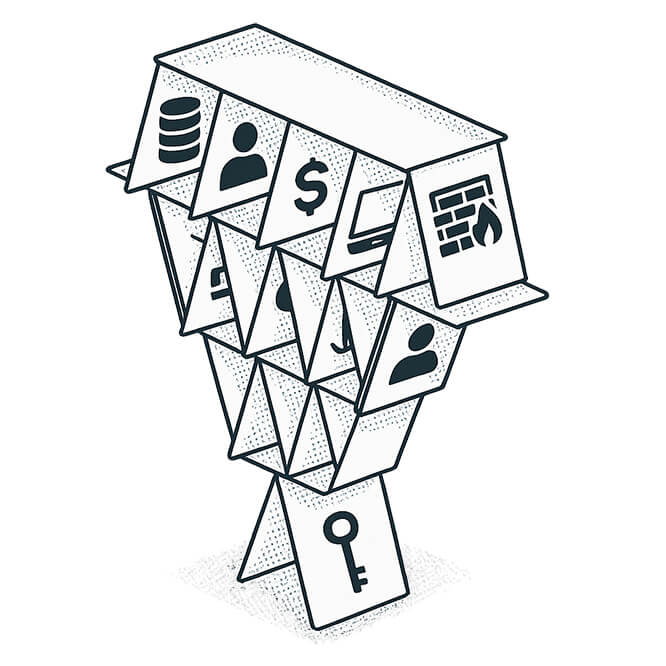
    House of Cards - System Brittleness

    "Every secret creates a potential failure point. Secrecy, in other words, is a prime cause of brittleness, and therefore something likely to make a system prone to catastrophic collapse."

    — Bruce Schneier, 2002

    Tide treats authority as the most sensitive secret in any system. It embodies that authority in cryptographic key material, the purest digital form of power over identity, access, and data. With Tide, any actor's unique agency can be expressed as a key - whether it's a user attesting to their identity, an IAM root key issuing JWTs, or a service decrypting protected data. Tide eliminates that secret by disintegrating it so it ceases to exist as a singular entity forever. An adversary can know everything and still achieve nothing. The ultimate security isn't hiding authority better. It's making sure it's beyond anyone's reach. That's not an incremental improvement - it's a fundamental redefinition of what security means.

    "In brands we trust." But should we?

    SolarWinds 2020

    Russian hackers compromised the CI/CD pipeline and got access to 18,000 organizations including the US Treasury, State Department, and Fortune 500 companies.

    Uber 2022

    Contractor's credentials compromised to gain administrative access to PAM solution, Slack, Google Workspace, and cloud environments.

    CircleCI 2023

    Session token theft allowed attackers to impersonate customers and access their secrets.

    Okta 2023

    Support system compromised. Attackers retrieved session tokens for 134 customers including 1Password, BeyondTrust, and Cloudflare.

    Azure 2023

    Chinese hackers stole a MSA signing key to forge authentication tokens for any Outlook account. They accessed 25 US government agencies including the State Department and Commerce Secretary.

    LastPass 2022

    Attackers accessed cloud storage admin credentials and stole entire customer vault backups.

    Cisco 2023

    Attackers compromised DevHub accessing source code and internal systems. The compromise went undetected for weeks.

    Toyota 2022

    Access keys to T-Connect service were exposed and allowed access personal information of 296,000 customers and potentially control vehicle functions.

    Slack 2022

    Attackers stole employee tokens accessing Slack's externally hosted GitHub repositories.

    GitHub 2022

    Attackers used stolen OAuth tokens to access private repositories of dozens of organizations.

    Dropbox 2022

    Attackers accessed 130 GitHub repositories and got access to internal prototypes and tools.

    Norton LifeLock 2023

    Attackers compromised the Password Manager accounts and had access to all stored passwords.

    These aren't startups making rookie mistakes. These are the guardians of digital identity. The companies people trust precisely because of their brand, their compliance certifications, their security theater.

    The pattern is undeniable: compromise always happens at the authority layer: An admin account. A signing key. A support system. A single point where legitimate power concentrates, and therefore where attackers focus.

    The $10 trillion paradox

    Global cybersecurity spend exceeds $250 billion in 2025. Cybercrime damage: $10.5 trillion annually.

    Every additional security layer, every new monitoring tool, every compliance framework, every security operations centre is predicated today on the same flawed assumption: that our root authority is protected. The mere thought of "our IAM is compromised", "our CISO is rogue", "our KMS is leaking" is inconceivable.

    The trust paradox deepens

    You can no longer rely on trust. Not in brands - Okta and Microsoft were compromised. Not in compliance - SolarWinds is SOC 2 certified. Not in security tools - LastPass IS the security tool. Not even in yourself - over 80% of breaches involve human error.

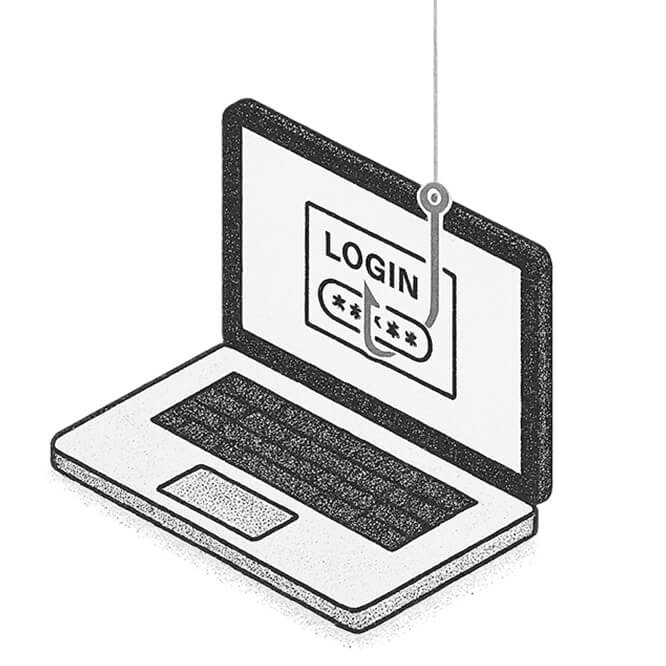
    Phishing - Professionals hack people

    "Amateurs hack systems, professionals hack people"

    — Bruce Schneier

    The solution isn't better trust. It's eliminating the need for trust entirely.

    The effect on you

    Every authentication vulnerability in your code becomes irrelevant when the authenticity proof can't be assembled. Ship 4x faster with AI tools without the 10x security risk.

    A CISO manages 76 security tools on average. None address the core problem: centralized pockets of authority. Tide eliminates this attack surface entirely.

    Average breach cost: $4.88 million. MGM lost $100 million from ten days of downtime. The insurability of these events isn't sustainable, with traditional architecture.

    SEC's 2023 cybersecurity rules make board members personally liable for "material" breaches. D&O insurance premiums increased 47% due to cyber liability. Their personal assets are at risk from architectural decisions made five years ago.

    Every VC portfolio company using centralized user management / IAM is a correlated risk. When Okta was breached, 134 customers fell like dominoes. The VC's 10x return evaporates with one compromised signing key.

    Hack-a-mole - Same thinking won't solve problems

    "We cannot solve our problems with the same thinking we used when we created them"

    — Albert Einstein

    The inflection point

    We stand at a rare moment where mathematical breakthrough meets market necessity:

    • AI-generated code increases vulnerability introduction 10x.
    • Breach costs reach $10+ million for enterprises.
    • Cyber insurance becomes unaffordable for centralized architectures.
    • Regulatory liability makes boards personally responsible.
    • Attack sophistication outpaces defensive capabilities.

    The answer isn't a stronger lock. It's removing the need for a door. Authority that is beyond anyone's reach is authority that can't be abused.

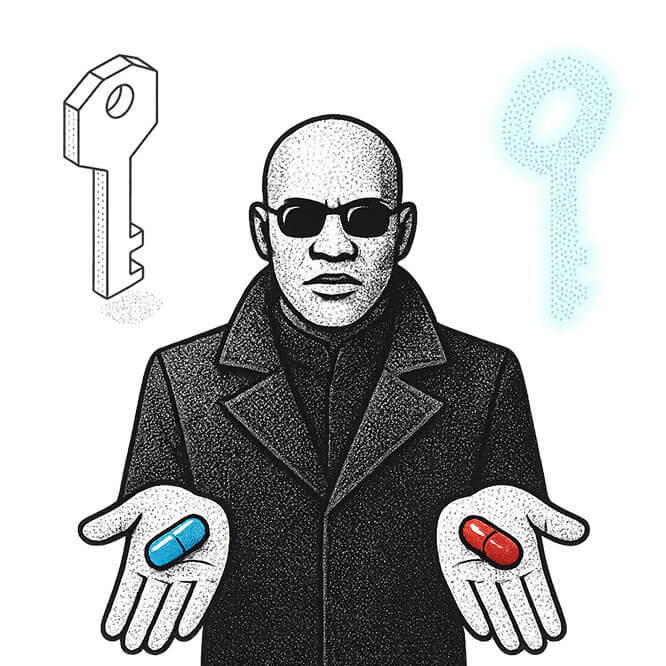
    Blue Red Pill - Build a new model

    "You never change things by fighting the existing reality. To change something, build a new model that makes the existing model obsolete."

    — Buckminster Fuller

    Rip god-like authority out of your platform

    No more root accounts. No more side channels or back doors. No more signing keys. No more single points where trust concentrates and catastrophe originates.

    Make breaches irrelevant, with security that's built into the fabric. Deploy in 10 minutes. Sleep soundly.

    The future isn't about trusting better. It's about not needing to trust at all.